
The seat of mercy
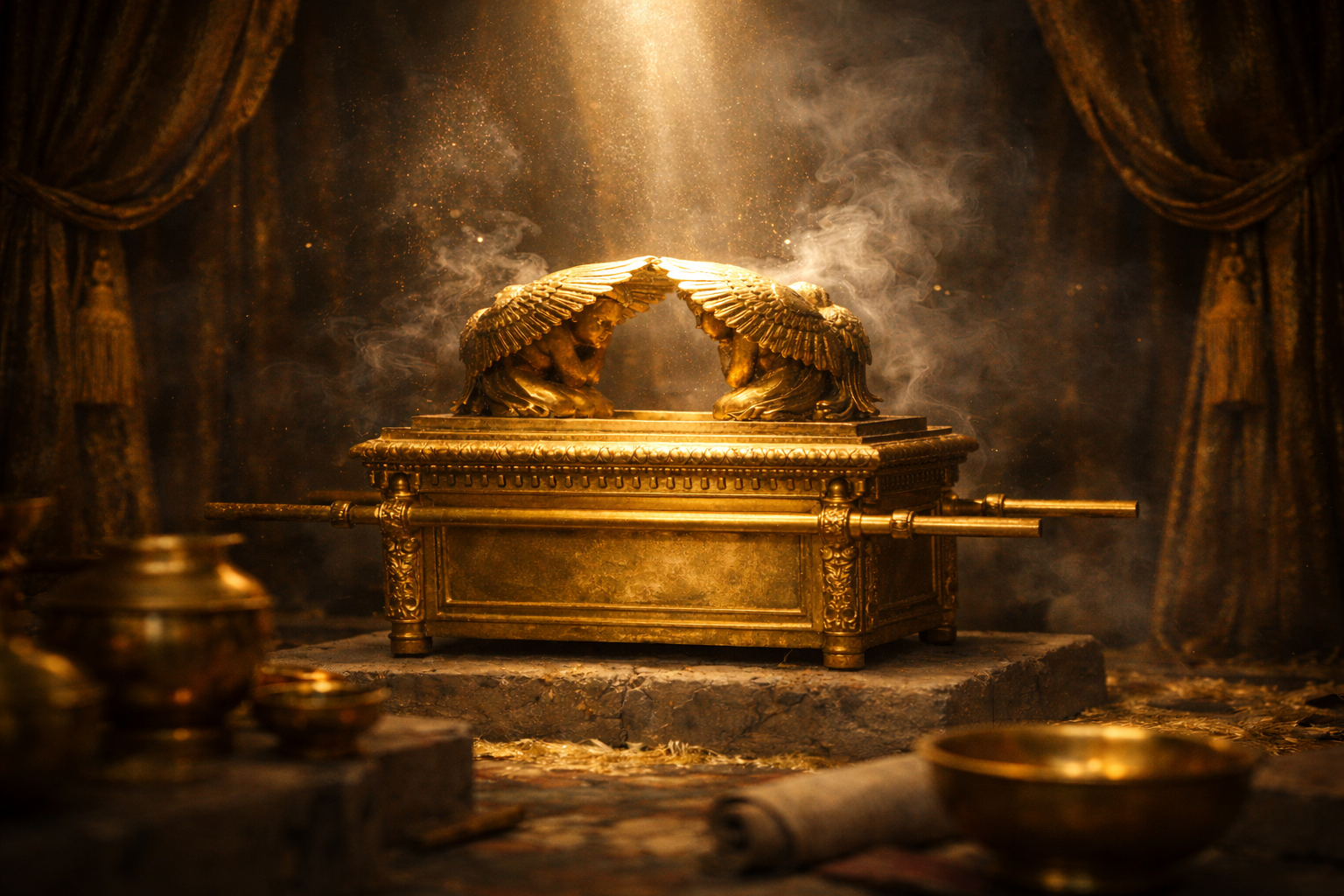
Exodus 25:17
17 And thou shalt make a mercy seat of pure gold: two cubits and a half shall be the length thereof, and a cubit and a half the breadth thereof.
The Ark of the Covenant, a sacred wooden chest overlaid with gold, served as the central symbol of God's presence among the Israelites, housing the stone tablets of the Ten Commandments, Aaron’s rod, and a pot of manna. The Ark stood in the Holy of Holies within the Tabernacle (and later the Temple) and was carried with great reverence during journeys and battles. Atop the Ark rested the mercy seat, a gold lid featuring two cherubim (angels) facing one another, which functioned as the throne or meeting place of God’s presence. This mercy seat was where the high priest would sprinkle the blood of sacrifice on the Day of Atonement to secure forgiveness and restoration for the people. Together, the Ark of the Covenant and mercy seat embodied both Covenantal law and God’s divine mercy. This Covenantal law revealed human obligation, while the mercy seat enacted God’s gracious provision for atonement and reconciliation which emphasizes holiness, divine dwelling, and the means by which sinners could be restored to relationship with God.
And we have to ask ourselves, “Why is the mercy seat at the center of God’s Covenantal law”? The answer lies in the Temple practice of the mercy seat and what it portends. The mercy seat, placed atop the gold-covered Ark of the Covenant, functioned as the symbolic throne of God's presence and the focal point for atonement rites. Once each year on Yom Kippur the high priest entered the Holy of Holies, sprinkled sacrificial blood on and before the mercy seat, and offered incense to secure forgiveness for himself and the people which enacted reconciliation between God and Israel. Beyond the annual rite, the mercy seat’s form—cherubim facing one another over God’s central place—emphasized divine sovereignty, holiness, and the possibility of nearness to God through ritual purity and obedience. Its practice reinforced communal identity around covenantal obligations: sacrifices, confession, and priestly mediation were required to access God’s mercy, teaching that access to divine forgiveness depended on reverent procedure.
And here is the portend or foreshadow. The gold given to Jesus by the Magi at his birth echoes the gold of the mercy seat in the Tabernacle because both signify divine presence, kingship, and atonement. The mercy seat, overlaid with pure gold, was the sacred meeting place where God's presence met Israel and where the high priest made atonement for the people's sin, while the Magi’s gift of gold acknowledged Jesus as King and pointed to his role as the visible meeting point of God with humanity. The image of gold beaten thin to fashion the covering of the mercy seat, then sprinkled with blood for atonement, points us to a powerful biblical parallel: just as the priests performed the ritual—striking an offering, laying blood upon the holy place to secure reconciliation—so Christ was struck and his blood was poured out to achieve our redemption. The beaten gold, made pliable and shaped to cover the Ark, evokes the vulnerability and submission of Jesus, who willingly endured suffering and humiliation; the sprinkling of blood for atonement foreshadows and is fulfilled in his sacrificial death, which restores our relationship with God. In both temple ritual and the cross we see costly obedience, the gravity of sin acknowledged, and the gracious provision of mercy that cleanses and reconciles.
And why is mercy important? Mercy is essential because it acknowledges human brokenness and chooses compassion over condemnation, creating space for healing, reconciliation, and transformation. Mercy breaks cycles of judgment by offering second chances, restores dignity to those who have failed, and models the unconditional love of Jesus. Mercy frees both giver and receiver from the corrosive effects of resentment and shame and reminds us that holding others to rigid standards without empathy often perpetuates harm. Ultimately, mercy reflects a deeper spiritual truth: that forgiveness and kindness are not signs of weakness but instruments of restoration.
Prayerful Thought….
7 Blessed are the merciful: for they shall obtain mercy. Matthew 5:7
And Remember…….
“Focus on the world or Jesus knowing that one will ultimately forget your existence!” -Dr Lee