
Heaven’s showbread
Exodus 25:30
30 Put bread of the Presence on this table to be before me at all times.
The Bread of Presence, also called showbread, was a sacred offering placed on a table in the Tabernacle and later in the Temple, signifying God’s continual provision and the covenant relationship between God and Israel. This showbread, known in Hebrew as “lechem panim” or "bread of the presence," was a set of twelve loaves representing the twelve tribes, arranged in two stacks and replaced every Sabbath; the removed loaves were eaten by the priests in a holy place, underscoring both ritual purity and shared sustenance. Crafted from fine flour and consecrated, the showbread stood before the Divine Presence as a visible reminder that worship involves both reverence and the daily dependence of the people on God for His provisions. The practice combined symbolism—God’s ongoing fellowship with Israel—and practical priestly provision, linking communal identity, sacrificial order, and the sacred rhythms of worship. So why is this showbread so important?
The key word here is “provision”. God continually provides for His people in ways both seen and unseen, meeting physical needs like food, shelter, and safety while also supplying spiritual sustenance through comfort, guidance, and strength. His provisions can arrive through the generosity of others, the wisdom found in Scripture and the inner spiritual comfort that steadies us in hardship. Even when circumstances feel scarce, God’s faithfulness and provision remains constant. Consequently, this invites us to trust that He knows our needs and works all things for our good (Romans 8:28). This steady care calls believers to gratitude, dependence, and a willingness to share God’s blessings with those around them. And again, in terms of this provision, we have to ask ourselves, “Why bread?”
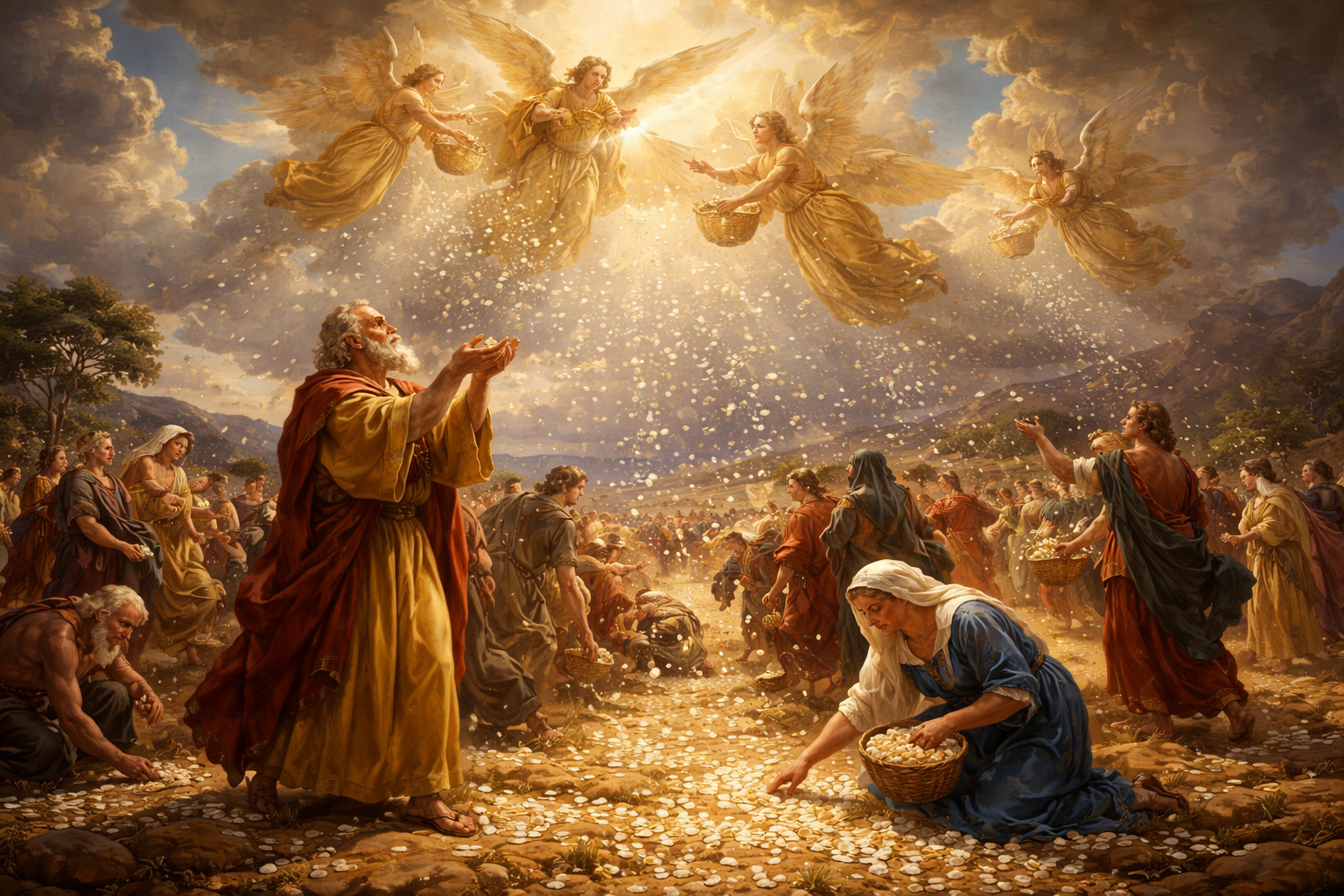
The true bread of our lives comes from heaven, not earth. The sustenance that ultimately satisfies our deepest longings is given by God rather than by human hands. We see this in two distinct examples in both the Old and the New Testament. The first is in Psalms 78:24-25 “24 He rained down manna for the people to eat, he gave them the grain of heaven. 25 Human beings ate the bread of angels; he sent them all the food they could eat.” Manna, whose name comes from the Hebrew question "man nah?" meaning "What is it?", is the miraculous food provided by God to the Israelites during their forty years in the wilderness. Hebrew Scriptures describe it as a small, flake-like substance appearing on the ground each morning. It sustained the people when no other provisions were available. And beyond its physical nourishment, it was collected daily (except on the Sabbath), with strict instructions not to be hoarded.
And the second example is found in John 6:35 (35 Then Jesus declared, “I am the bread of life. Whoever comes to me will never go hungry, and whoever believes in me will never be thirsty.”) Here, Jesus likens Himself to the true bread from heaven (manna). We often see bread as a literal earthly provision that feeds the body for a time, but the heavenly Bread—Christ himself—nourishes our soul, restores hope, and imparts life that endures beyond circumstances. When we look to daily needs, achievements, or possessions as our source of security, we mistake temporary comfort for ultimate nourishment. In other words, as bread is to our bodies, the word of God (manna) is to our souls. Or better put, our earthly expectations are familiar and ordinate, while blessings from God are inordinate and unexpected and should be celebrated. Manna, “What is it?”
Prayerful Thought….
4 Jesus answered, “It is written: ‘Man shall not live on bread alone, but on every word that comes from the mouth of God.”. Matthew 4:4
And Remember…….
“Rewrite your story, but this time, let God hold the pen!” -Dr Lee